Retro Fast Food Stickers Embroidery Review
As a designer who spends half my life staring at stitch charts and the other half troubleshooting tension issues on vintage machines, I don’t just look at a design file; I look at how it will behave under the needle. When I first pulled up Retro Fast Food Stickers, my immediate thought wasn't about the colors, but about the vibe. It screams nostalgia. We are talking about that specific, sun-drenched era of diners, checkered floors, and paper hats. But does it translate well from a screen to thread? That is the question every embroiderer needs to answer before clicking "start."
The First Impression: Mood and Visual Personality
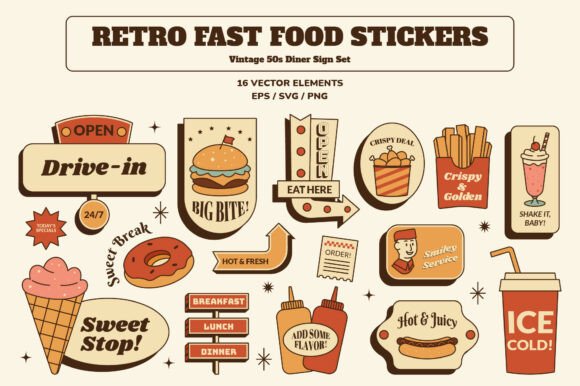
The moment you open this illustrations category asset, the personality jumps out. It isn’t trying to be high-end culinary art; it is intentionally playful, bold, and slightly chaotic in the best way possible. The layout features classic icons—juicy burgers, crispy fries, hot dogs, donuts, soda cups, ice cream cones, and milkshakes. This collection feels like a sticker sheet peeled off a 1950s lunchbox.
For an embroidery project, this visual weight is crucial. Because these are depicted as stickers, they likely have defined borders or a distinct separation from the background. This makes them incredibly forgiving for machine embroidery. Unlike intricate realism, which can turn into a muddy mess if your thread quality varies, these graphic shapes hold their integrity. They feel like a tote bag design waiting to happen, or perhaps a cluster of embroidered patches on a denim jacket. The mood is fun, approachable, and instantly recognizable, which is exactly what sells in today’s handmade market.
Real-World Application: Where This Design Shines
I recently evaluated this graphics set with a specific scenario in mind: creating a line of custom apparel for a local food truck or a retro-themed cafe. Here is how Retro Fast Food Stickers performs in those practical situations.
- Custom Apparel and Sweatshirts: Imagine a heather grey sweatshirt with a scattered print of these icons across the back. The contrast between the soft fabric texture and the bold, graphic nature of the design creates a professional yet casual look. It works beautifully for sweatshirt embroidery because the shapes are distinct enough to stand out without overwhelming the garment.
- Tote Bags and Canvas Items: This is arguably the strongest use case. A canvas tote featuring a single, large burger icon or a cluster of smaller items like fries and a soda cup looks incredibly polished. It elevates a simple $5 bag into a boutique product. For an Etsy seller, this is gold. It appeals to students, foodies, and anyone looking for a cute, functional gift.
- Baby Items and Nursery Decor: Don’t overlook the softer side of this theme. The bright colors and familiar shapes make this perfect for baby onesies or nursery wall hangings. A small, centered heart made of tiny fries or a cute ice cream cone adds a touch of whimsy to baby embroidery projects. It feels safe, cheerful, and timeless.
- Holiday Gifts and Personalized Products: Think about holiday gifting. These designs fit perfectly into a "Treat Yourself" theme for Christmas or a birthday gift for a friend who loves diner culture. When you offer personalized gifts with this design, you aren't just selling an image; you are selling a feeling of comfort and joy.
Technical Considerations and Potential Pitfalls
However, no design is flawless, and as a reviewer, I need to point out where you might encounter friction during production. Understanding the limitations of Retro Fast Food Stickers will save you hours of re-threading and frustration.
First, consider your hoop size. If you are attempting to digitize or stitch these as part of a very dense cluster, you need to ensure your hoop is large enough to accommodate the spread without distorting the fabric. Conversely, if you are using this for a small detail, such as a logo on a cap, you must inspect the small details closely. Tiny lettering or thin lines within the sticker borders can become illegible if the stitch density is too high or if the fabric stretches under the hoop.
Fabric choice is another critical factor. While this design looks great on stable cottons and canvas, be cautious when working with stretchy knits or textured fabrics like bouclé. On stretchy fabric, the running stitch outlines might pucker unless you use a strong cut-away stabilizer. Similarly, on dark fabrics, you will need to pay close attention to thread colors. The original illustration likely relies on white or light backgrounds to pop; if you are stitching directly onto black denim, you may need to add a backing layer or adjust your color palette to maintain visibility.
Also, think about the end user. If this is going on a kitchen towel or an apron, it will face frequent washing. Ensure that the fill stitch areas are balanced so they don’t create stiff, uncomfortable spots on the fabric. A good rule of thumb is to test the design on scrap fabric first. Check the thread color contrast by viewing your mockup in black and white. If the details disappear in grayscale, they might get lost in real life depending on your lighting conditions.
Practical Designer Notes for Success
To get the most out of this machine embroidery design, I recommend the following workflow:
- Stabilizer Selection: Always match your stabilizer to your fabric. For lightweight tees, use a tear-away. For heavy denim or towels, a cut-away is non-negotiable for longevity.
- Thread Quality: Use high-quality polyester or rayon thread. Cheap thread can break under the tension of detailed satin stitch work, especially around the curved edges of the burger buns or donut holes.
- Mockup Testing: Before committing to expensive materials, create a printable mockup or a digital preview. See how the design scales. Does it look cluttered at 4 inches? Is it too sparse at 8 inches? Adjust the scale before you load the hoop.
- Licensing Check: If you plan to sell finished products, double-check the license terms. Some digital embroidery files allow personal use only, while others permit commercial sales of physical goods. Never assume; always verify to protect your craft business.
Final Verdict
Retro Fast Food Stickers is more than just a cute clip-art collection; it is a versatile tool for any designer looking to tap into the nostalgia market. It balances visual appeal with technical feasibility, making it suitable for everything from a quick hobbyist project to a high-volume commercial embroidery run. Whether you are creating design assets for clients or building your own brand identity, this design brings a level of professionalism and charm that resonates with buyers. Just remember to respect the fabric, manage your expectations on fine details, and always test before you sell. When executed correctly, the result is a finished product that customers will want to wear, carry, and display with pride.