Merry and Bright Christmas PNG, Retro Ho
As a designer who spends half her life staring at stitch density charts and the other half troubleshooting thread breaks, I don’t just look for "pretty" graphics. I look for viability. When I first pulled up Merry and Bright Christmas PNG, Retro Ho, my immediate reaction wasn't about the holiday cheer—it was about execution. Would this translate well from a digital file to physical fabric? Could it hold up in a real-world commercial embroidery project without looking muddy or over-stitched?
The design comes as part of a T-Shirt Designs category under Graphics, but let’s be clear: if you are buying this for machine embroidery, you need to understand what you are actually getting. The product description confirms you receive a ZIP folder containing 1 Ai, 1 SVG, and 1 PNG. This is a crucial distinction. While these are fantastic assets for heat transfer vinyl (HTV), sublimation, or printing on demand, they are not native machine embroidery files (.dst, .pes, .jef). However, many small business owners use these vector and raster assets as templates to manually digitize their own designs, or they use them for non-embroidery applications like direct-to-garment printing.
First Impressions: Mood and Visual Personality
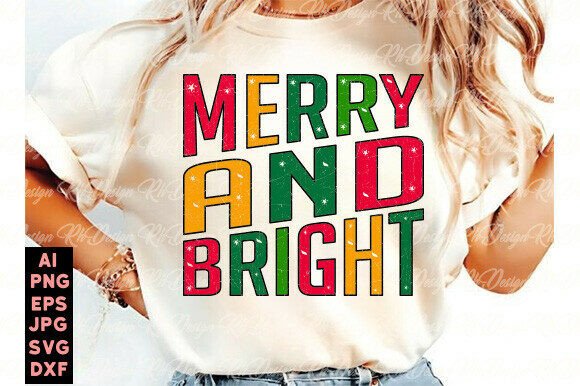
The title Merry and Bright Christmas PNG, Retro Ho sets a very specific tone. From a visual standpoint, the "Retro" aspect suggests bold lines, perhaps a vintage color palette, and a nostalgic layout that stands out against the sea of traditional, ornate Christmas clipart. In my experience, retro aesthetics work exceptionally well in the handmade market because they feel curated and intentional rather than generic.
The mood is upbeat and accessible. It doesn’t scream luxury; it whispers "comfort." This makes it an ideal candidate for cozy winter apparel, kitchen textiles, and casual gifts. The layout appears balanced, which is the first step toward a successful embroidery project. If the elements are too scattered, stitching becomes a nightmare. If they are too dense, you risk puckering. This design seems to strike a middle ground that favors readability and charm over intricate complexity.
Real-World Application: Where Does This Fit?
Let’s talk about how I would actually deploy Merry and Bright Christmas PNG, Retro Ho in my studio. I recently had a client request custom holiday merch for a local boutique pop-up shop. They wanted something that felt personal but could be produced quickly during the busy season. Here is where this graphic shines:
- Custom Apparel & Sweatshirts: The retro vibe pairs perfectly with heavyweight cotton sweatshirts. For a sweatshirt embroidery application, if you were to digitize this based on the provided SVG, a medium-density fill stitch would give it a plush, tactile quality that customers love.
- Tote Bag Design: Canvas totes are a staple for Etsy sellers. Using this as a base for a large chest print creates a statement piece. If used for a tote bag design, the contrast between the bright graphic and natural canvas creates a striking visual that photographs beautifully for social media.
- Kitchen Textiles: Tea towels and aprons are high-margin items during the holidays. A smaller placement of this design on a linen apron adds a touch of personality to a functional item. It works well as a personalized gift because it feels warm and homey.
- Baby Embroidery: Soft bodysuits and muslin blankets benefit from simpler, bolder graphics. The retro style is timeless enough that parents won’t tire of it as the child grows, making it a smart choice for long-term inventory.
Technical Considerations for Embroidery Designers
Even though this is sold as a digital graphic asset, any serious craft business owner knows that turning a PNG into a stitched reality requires careful planning. If you plan to use this as a reference for creating your own machine embroidery design, here is what you need to watch out for.
Stitch Density and Detail: The "Retro" style often relies on solid blocks of color. In embroidery terms, this means you will likely be using fill stitch heavily. You must ensure that the design isn't so dense that the fabric pucks. Test your stitch density by running a sample on scrap fabric. If the design has tiny details, consider simplifying them. Tiny text or thin lines often get lost in the thread colors or look jagged after washing.
Hoop Size and Placement: Before committing to production, confirm the hoop size required. A large, all-over print might require a multi-hooping technique, which increases labor time and potential misalignment errors. For a small shop product like a hat or a pocket patch, keep the design compact. A crowded embroidered patch can look messy and reduce the perceived value of the item.
Fabric Texture and Stabilizer: The choice of fabric dramatically affects the final look. On a smooth cotton tee, the satin stitch edges will look crisp. On a textured fleece or a nubby knit sweater, the design may lose definition. Always use the proper stabilizer—cut-away for stretchy knits and tear-away for stable wovens—to prevent shifting. If you are working on dark fabric, you may need a top stabilizer or a backing layer to ensure the thread colors pop and don't get swallowed by the dark background.
Where to Use With Caution
Not every surface is created equal. There are specific scenarios where Merry and Bright Christmas PNG, Retro Ho might struggle:
- Small Hoop Sizes: If you attempt to cram this design into a 4x4 inch hoop without scaling it down significantly, you will lose detail. Small details become indistinguishable blobs.
- Curved Surfaces: Applying this to a baseball cap or a curved tote handle requires advanced hooping techniques. The distortion inherent in curving flat fabric can warp the symmetry of the design.
- Thin or Stretchy Fabrics: Without adequate stabilization, thin fabrics will pucker, and stretchy fabrics will distort the running stitch lines, making the design look uneven.
- Dense Stitch Areas: Avoid placing this design over existing seams, pockets, or zippers. The added bulk can make the garment uncomfortable and increase the risk of needle breakage.
Impact on Brand and Customer Trust
In the world of commercial embroidery and handmade goods, presentation is everything. A well-executed design builds customer trust. When a buyer sees a clean, professionally finished product, they assume the entire brand is professional. Conversely, loose threads, puckering, or misaligned prints signal low quality.
Using a recognizable, aesthetically pleasing graphic like Merry and Bright Christmas PNG, Retro Ho helps establish brand consistency. It signals that you pay attention to trends and design quality. For digital product sellers offering printable mockups, this graphic provides a strong focal point that draws the eye. For physical products, it enhances the handmade presentation, making the item feel more special and worthy of gifting.
Final Designer Verdict
Merry and Bright Christmas PNG, Retro Ho is a versatile, mood-appropriate asset that fits seamlessly into the current landscape of holiday-themed handmade goods. Its retro aesthetic offers a fresh alternative to traditional Christmas imagery, appealing to buyers looking for something stylish yet festive.
However, remember that this is a digital embroidery file source (PNG/AI/SVG), not a ready-to-stitch machine file. Your success depends on your digitization skills or your chosen production method. If you are printing, the high-resolution PNG ensures crisp results. If you are embroidering, treat the SVG as your blueprint and invest time in testing stitch types, densities, and stabilizers.
Before you list this on your Etsy shop or add it to your craft fair inventory, always test the design on scrap fabric first. Check the thread color contrast. Inspect small details. Confirm whether the design works for both personal and commercial projects by reviewing the licensing terms included in the ZIP folder. By taking these practical steps, you transform a simple graphic into a profitable, professional finished product that customers will love.