Retro Classic Car Collection Review
As a designer who spends half my life staring at stitch charts and the other half worrying about thread tension, I don’t just look for "pretty" images when I’m sourcing assets. I look for viability. Can this design actually be stitched? Will it hold up on a cotton canvas tote, or will it pucker on a polyester blend sweatshirt? Does it read clearly from three feet away, which is usually how far a customer stands in a craft fair booth?
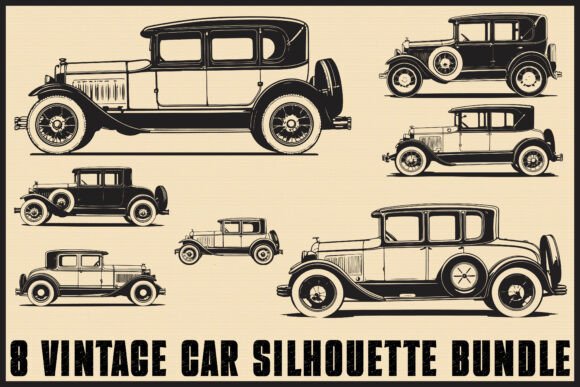
This is why I took a close look at the Retro Classic Car Collection. It is marketed as an 8 Vintage Car Silhouette Bundle, positioned under Illustrations and Graphics. On paper, that sounds like a simple vector pack. But in the world of machine embroidery, silhouettes are deceptively tricky. They rely entirely on shape language and negative space. If the curves aren’t right, the car looks wrong. If the scale is off, the detail gets lost. Here is my practical breakdown of how this collection performs when moved from screen to fabric.
The First Impression: Mood and Shape Language
The immediate draw of the Retro Classic Car Collection is its nostalgia factor. We all have that mental image of a 1950s cruiser or a 1930s roadster. The collection leans heavily into those iconic profiles—the long hoods, the rounded fenders, the distinct grilles. For a handmade product, this visual shorthand is powerful. You don’t need text to tell the buyer what they are looking at; the silhouette does the heavy lifting.
From a design perspective, the clean lines of these silhouettes make them excellent candidates for various embroidery techniques. Because they are solid shapes rather than intricate line art, they translate well into fill stitches. This means you can experiment with texture. A satin outline around a dense fill stitch creates a crisp edge that resists fraying and looks professional. However, because they are silhouettes, they lack internal detail. This is not a flaw; it is a feature. It means the design is forgiving on lower-quality fabrics where fine details might get swallowed by the weave.
Real-World Application: From Screen to Stitch
I put the Retro Classic Car Collection through its paces with a few specific project scenarios. The goal was to see how it would function as a commercial asset for small business owners and Etsy sellers.
- The Custom Tote Bag: This is perhaps the most natural fit. A single retro car silhouette placed centrally on a heavy-duty canvas tote bag reads instantly as "vintage aesthetic." When stitched in a contrasting thread color—say, cream thread on navy blue—the silhouette pops. It feels like a boutique item rather than mass-produced merchandise. The simplicity allows the quality of the stitching to shine, building trust with buyers who associate neat stitches with durability.
- Sweatshirt Embroidery: Chest-sized logos are a staple for custom apparel. Using one of the cars from the bundle as a left-chest logo works well, provided the hoop size is managed correctly. The clean edges prevent the common issue of "muddy" stitching on textured fleece or cotton blends. It gives a polished, branded look that appeals to both hobbyists and corporate gift buyers.
- Baby and Nursery Items: There is a surprising demand for gender-neutral nursery decor. A subtle, monochromatic embroidery of a classic car on a muslin blanket or a crib sheet adds a touch of whimsy without being overly loud. The soft curves of the vintage cars feel gentle enough for baby items, especially when paired with neutral thread colors.
- Embroidered Patches: For uniform patches or hat badges, silhouettes are ideal. They require less thread than complex designs, reducing production time and cost. The Retro Classic Car Collection offers enough variety across the eight designs to create a cohesive series of patches for a bike shop, a garage brand, or a car club.
Where Caution Is Required
No design is perfect for every surface. While the Retro Classic Car Collection is versatile, there are specific situations where you need to exercise care.
First, avoid using these designs on highly textured fabrics like bouclé wool or thick terry cloth unless you are using a heavy stabilizer and potentially simplifying the design further. The needle penetration can become difficult, and the thread may not lay flat against the uneven surface. Similarly, thin fabrics like silk or lightweight rayon require a tear-away stabilizer to prevent puckering, but even then, the weight of the thread might distort the fabric if the stitch density is too high.
Another critical consideration is scale. These are silhouettes. If you downscale a design too much, you lose the character of the car. A tiny car on a keychain or a small patch needs to retain its recognizable features. If the wheels become indistinguishable blobs or the windows disappear entirely, the design fails. Always test your embroidery file at the exact size you intend to sell. Do not assume that because it looks good at 4 inches wide, it will look good at 2 inches wide.
Dark fabrics also present a challenge. While contrast is key, dark threads on dark fabric can sometimes look muddy if the lighting isn't right. I recommend sticking to light-on-dark or dark-on-light combinations for maximum impact. If you want to use dark thread on dark fabric, consider adding a contrasting backing or a satin border to lift the design visually.
Practical Designer Notes for Execution
Before you upload any of these files to your machine, here is my checklist for ensuring a professional result:
- Test on Scrap Fabric: Never run a new design directly onto your final product. Use a scrap piece of the same fabric type to check tension and alignment.
- Check Thread Color Contrast: Lay out your thread spools next to your fabric before starting. Ensure the thread stands out clearly against the background.
- Review Stitch Density: High-density fills can cause stiff spots in garments, especially on children's clothing or delicate shirts. If the design feels too stiff, consider switching to a lighter fill pattern or using applique techniques.
- Confirm Hoop Size: Ensure your design fits within your machine’s hoop limits. If you are working with large items like blankets, you may need to digitize the design in sections or use a multi-hoop approach.
- Inspect Small Details: Zoom in on the digital preview. Are the wheel spokes distinct? Is the grille clear? If details are too fine, simplify them in your digitizing software before stitching.
- Black and White Mockups: View your design in grayscale. This helps you judge contrast and balance without the distraction of color. If it doesn’t work in black and white, it won’t work in color.
Final Verdict on Visual Appeal and Value
The Retro Classic Car Collection succeeds because it understands the power of simplicity. In a market saturated with complex, colorful designs, a clean silhouette stands out. It feels timeless, which increases the perceived value of the finished product. Buyers are willing to pay more for items that look curated and intentional.
For the Etsy seller or craft business owner, this bundle offers flexibility. You can mix and match different car styles to create themed collections. You can pair the graphics with typography for a complete design package. The versatility extends to digital products as well; these illustrations can be used for printable mockups, social media content, and branding materials, making them a valuable asset beyond just the physical stitch.
Ultimately, the success of any embroidery project comes down to execution. The Retro Classic Car Collection provides a strong foundation with its recognizable shapes and nostalgic mood. By paying attention to fabric choice, thread contrast, and stitch quality, you can transform these simple illustrations into premium handmade products that resonate with customers. Just remember to check your licensing terms carefully before selling finished items, and always prioritize quality control to maintain your reputation as a skilled maker.